Growing Season
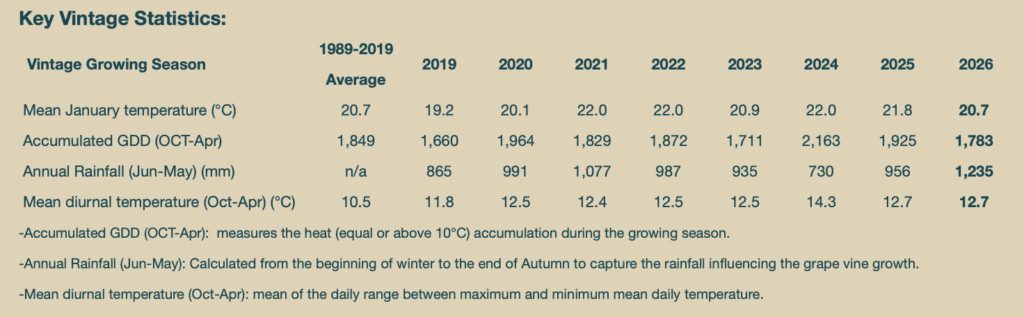
Consistently high rainfall from winter through to autumn brought some anxious moments for growers. “Saturated soils delayed vineyard access and made the timing of critical early-season disease prevention programs challenging. Fortunately, conditions improved significantly as the season progressed and disease pressure remained relatively low throughout the growing season,” said Tyke Wheatley, Windance Estate.
The early season moisture carried vines into spring with strong reserves, supporting healthy growth. A mild spring gave way to a warm, consistently dry summer, with afternoon sea breezes once again playing their signature role in reducing disease pressure, moderating ripening conditions and delivering a long, even growing season.
After last season’s absence, growers welcomed the return of marri blossom this year. “Marri blossom was abundant and extended throughout much of the growing season, providing an important alternative food source for our native birds – this allowed some growers to avoid netting white varieties altogether,” Tyke Wheatley commented.
Harvest Conditions
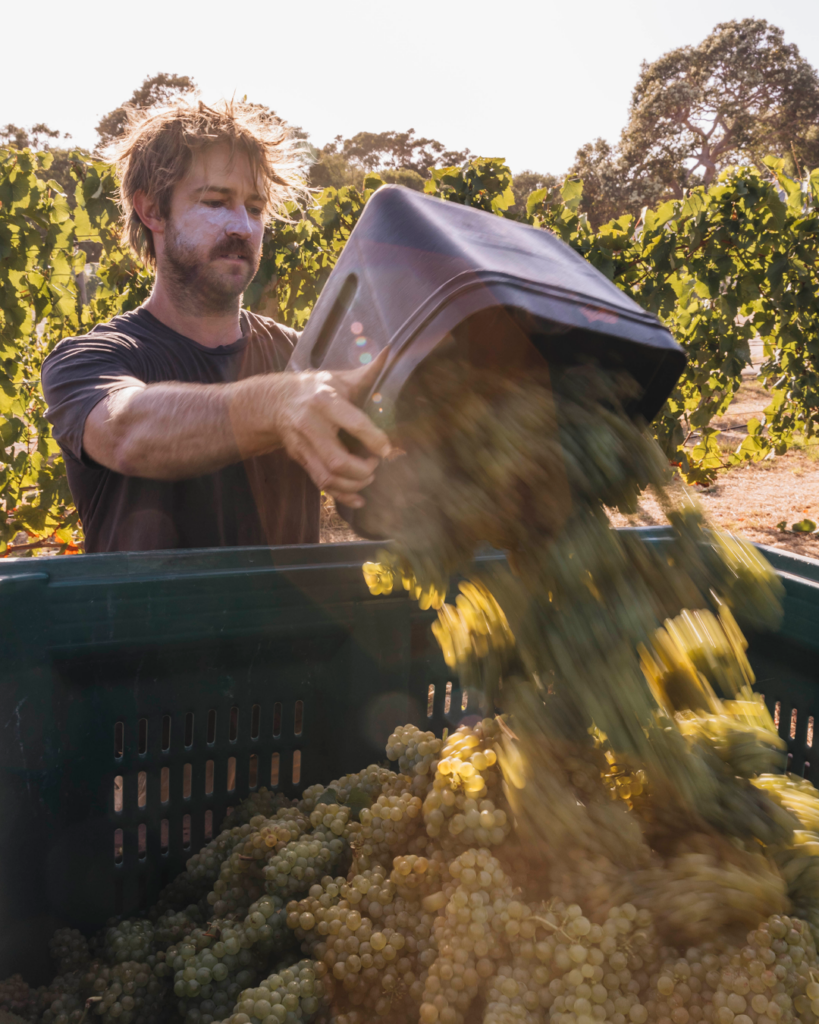
Harvest for white varieties commenced in early February. Ideal autumn conditions, with mild warm days and cool nights, preserved freshness in the fruit and extended the harvest period, allowing whites to run neatly into reds. Many wineries took full advantage of the conditions, extending their harvest across two full months.
The approach of ex-Cyclone Narelle at the end of March prompted growers to bring forward the timing of red picking, with most fruit already at optimal ripeness and harvested by late March ahead of the forecast rain. For those who held off, the rainfall was less than expected and the impact minor, allowing the remaining fruit to continue ripening cleanly.
An Excellent Vintage
Warm days, cool nights and an extended ripening period allowed fruit to develop excellent flavour, natural balance and strong varietal definition resulting in both white and red varieties performing strongly. Whites will shine in the glass – Chardonnay has been exceptional, showcasing true elegance and poise. The reds, and in particular Cabernet Sauvignon, are revealing great structure and ageing potential.
“The 2026 vintage showcased Margaret River at its best. Following one of the wettest winters on record and a relatively seamless growing season, we were rewarded with pristine fruit displaying exceptional concentration, vibrant natural acidity and outstanding varietal expression. It was a season of exceptional quality from vineyard to winery and, quite simply, a pleasure to grow fruit,” said Tyke Wheatley.
Total tonnage is expected to be significantly lower than recent years, as growers and producers adapt to changing market conditions. Margaret River Wine Association CEO Penny Dickeson said, “As a region renowned for its dedication to sustainability, it is essential that our Margaret River members continuously review and improve their operations. Many growers and producers are taking this opportunity to realign their vineyard plantings with their long-term plans, positioning themselves strongly for generations to come.”
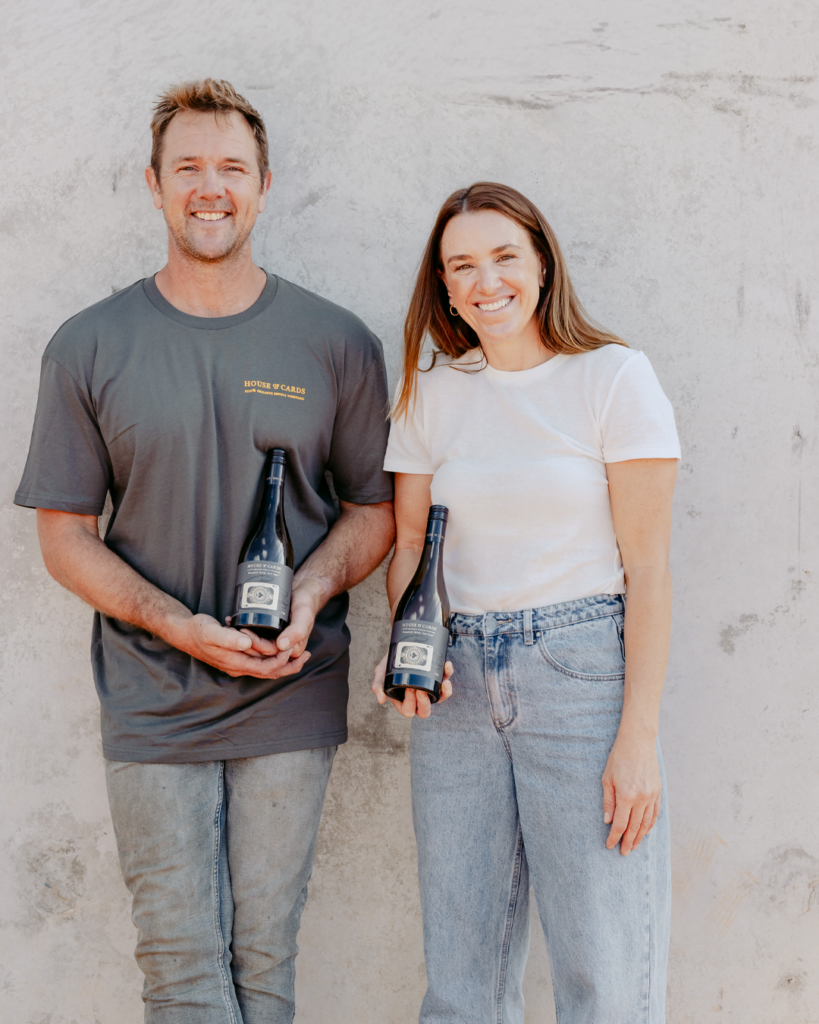
Images: Greenpiper Wines Cabernet Sauvignon; Tyke Wheatley from Windance Wines