Foundational Years
For over 50,000 years, the Wadandi people have walked this ancient land. The Margaret River region first saw European settlement in August (1830) and Vasse (1841). Vines were planted in these early days and served the American Whalers working in a nearby town, Albany. Small plots were grown in family vineyards.
The Margaret River area struggled in the 1960s and 1970s, dependent on dairy farming and timber, while frequented by alternative lifestylers who were drawn to the impressive coastline. The locals were keen to diversify into industries such as potatoes and pine plantations and some were open to the lure of viticulture.
Dr Gladstones’ scientific papers (details below) proved to be the catalyst for commercial planting and led to medical doctors Tom Cullity and Bill Pannell spending endless weekends scouring the region looking for the ideal plot, eventually planting Vasse Felix (1967) and Moss Wood (1969).
This was quickly followed by Cape Mentelle (1970), Cullen Wines (1971), Sandalford (1972), Leeuwin Estate, Woodlands and Wrights (1973). By 1980 there were 20 vineyards operating in Margaret River.
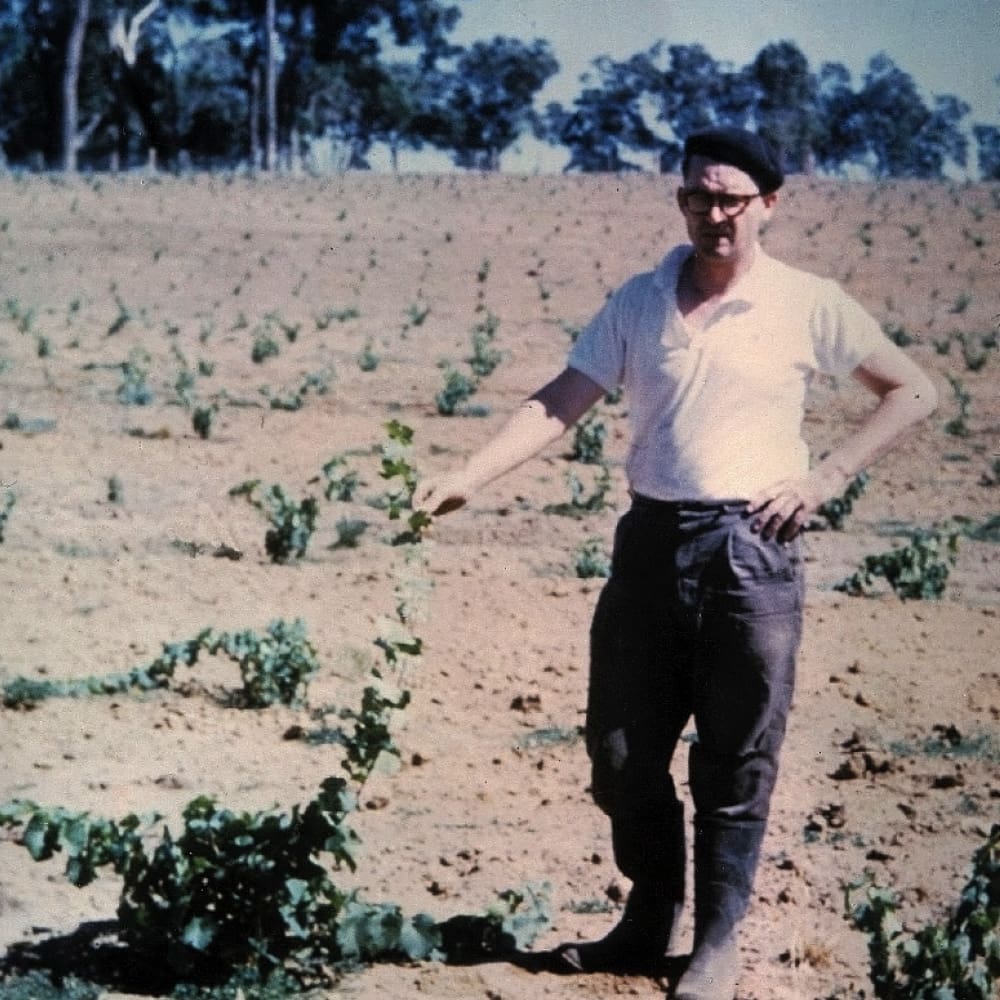
In the 1980s, Margaret River Cabernet Sauvignon and Chardonnay were catapulted to international fame when major accolades were achieved by Cape Mentelle and Leeuwin Estate.
IMAGE: JR & DAVID HOHNEN WITH FRIENDS
FOUNDERS OF CAPE MENTELLE
Scientific Origins
The Swan Valley was Western Australia’s primary wine growing area since 1829. In 1955, Professor of Viticulture at University California Davis, Dr Harold Olmo was invited to Western Australia to report on ‘the problems and possibilities of the viticulture industry’.
Following an eight-month visit, Olmo published, ‘A Survey of the Grape Industry of Western Australia’, outlining the fine wine viticulture potential of the south-west of Australia.
Olmo’s research was expanded upon in 1965 and 1966, with two reports by Senior Lecturer in Agronomy at the University of Western Australia, Dr John Gladstones. The first examined the suitability of Australia’s south-west for viticulture, and the second focused solely on the Margaret River and Busselton areas, suggesting Cowaramup-Bramley and Witchcliffe-Forest Grove as suitable localities for grape growing.
Margaret River Geographical Indicator
In 1994, the Australian Federal Government legislated for the introduction of Geographical Indicators, establishing regional boundaries for its wine regions. Dr Gladstones offered a set of recommendations for delineating the Margaret River Wine Region in June 1994. His proposal was accepted and, in 1996, Margaret River became one of the first three wine regions in Australia to have its boundaries legally defined and entered in the Register of Protected Names.
Margaret River has no official sub-regions, but it does have distinctions based on climate. In 1999, Dr Gladstones presented a paper proposing six sub-regions for Margaret River, based on climate and soil differences: Yallingup, Carbunup, Wilyabrup, Treeton, Wallcliffe and Karridale. These localities are sometimes used to provide context and a point of reference, however, it is important to recognise that these have not been scientifically verified as Geographical Indicators, or approved by the Australian Government.
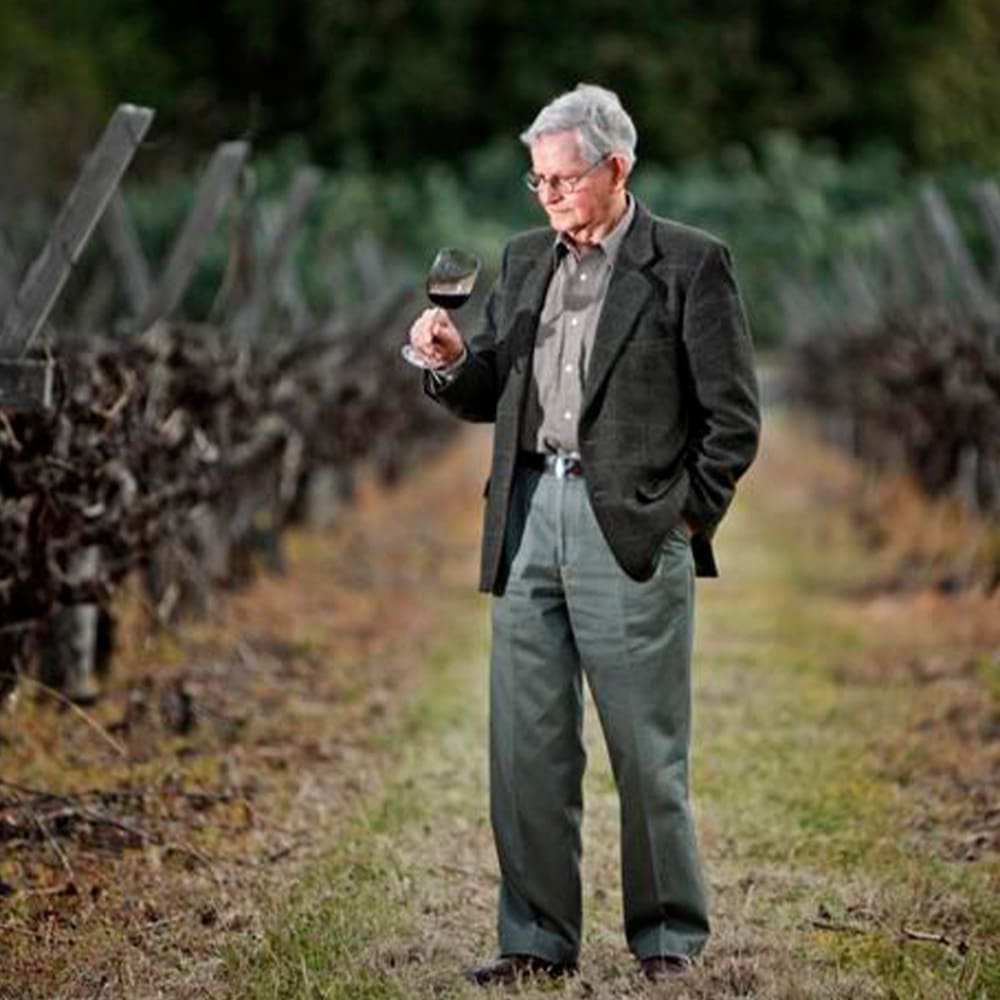

What is the Gladstones Line?
Dr John Gladstones AO has a line of longitude named after him. The Gladstones Line runs north to south at longitude 115°18’E, just west of Busselton to form the eastern boundary of the designated Margaret River Wine Region Geographical Indicator (GI).
Continuing to Put Science First
A great body of work has been carried out over the past 50 years to profile the soils and climate of the Margaret River region. However, these projects led by independent researchers, government departments and industry bodies had largely remained disconnected.
In 2018, the Margaret River Wine Association formed a sub-committee to work closely with the Western Australian Department of Primary Industries and Regional Development (DPIRD) to commence an exciting collaborative project. The remit of the “Margaret River Provenance Project” is to further understand and define the region.
Today, Margaret River continues to grow its international reputation for producing world-class fine wine. The use of science, innovation and technology continue to be a driving force, as the industry strives towards a greater and more rigorous interpretation of the influence of environment on wine. This is particularly relevant to the sustainability story which is rapidly becoming a pillar of Margaret River’s production ethics and management systems.